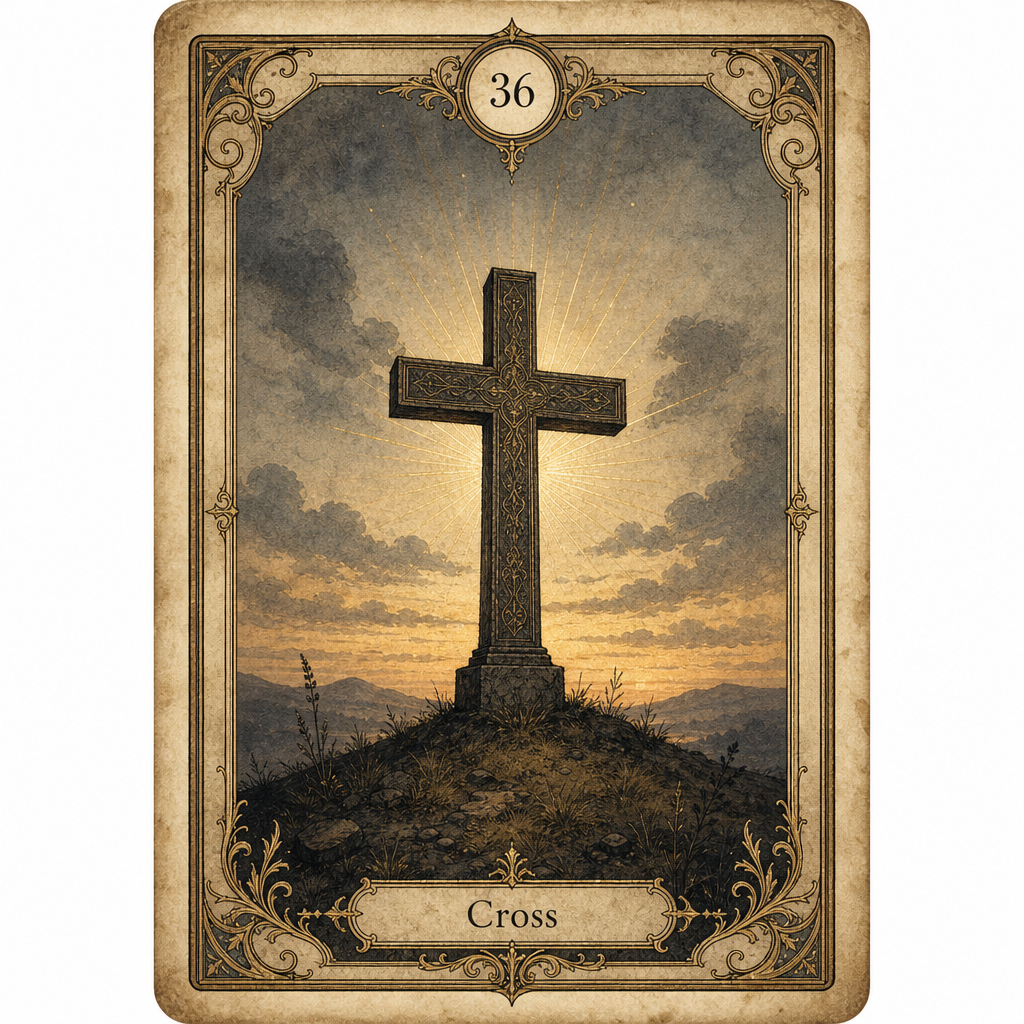
Card 36
Cross Lenormand Meaning
Heavy lessons, shared burdens, and spiritually significant tests.
- burden
- fate
- pain
- test
- faith
Quick advice
Accept what must be carried, seek support, and turn hardship into meaning without glorifying suffering.
Core meaning
Cross is the card of burden, fate, suffering, responsibility, faith, and unavoidable tests. It often describes something heavy that must be carried rather than quickly solved. The Cross can point to grief, sacrifice, guilt, duty, religious themes, or a karmic-feeling situation that carries deep meaning. It is not a light card, but it can bring spiritual seriousness and the strength that comes from accepting what must be faced.
Symbolism
- The cross represents sacrifice, faith, duty, suffering, and spiritual meaning.
- Its weight suggests burdens that are carried because they cannot simply be avoided.
As a person
As a person, Cross is burdened, serious, faithful, dutiful, suffering, morally focused, or carrying a heavy responsibility.
Helpful expressions
- Meaning
- Faith
- Endurance through hardship
- Spiritual depth
Potential challenges
- Pain
- Burden
- Guilt
- Heavy responsibility
Reading meanings
Love
In love, Cross can show a painful bond, karmic attachment, responsibility, grief, or a relationship that feels difficult to release because of duty or fate.
Career
In career readings, Cross points to heavy workload, difficult projects, taking blame, moral pressure, or a career path that tests endurance.
Money
For money, Cross can indicate debt burden, financial hardship, obligations, sacrifice, or money decisions shaped by duty and responsibility.
Health
For health, Cross may show chronic burden, pain, emotional weight affecting the body, or the need for spiritual and practical support.
Timing
Heavy or fated timing: during a test, at the end of a difficult cycle, or when responsibility cannot be avoided.
Nearby cards
Cross burdens nearby cards and makes their themes heavier, fated, painful, spiritual, or shaped by duty.
Modern meanings
Modern Cross meanings include burnout, duty work, moral injury, grief processing, religious identity, public responsibility, and high-stakes hardship.